Showing posts sorted by relevance for query personal collection. Sort by date Show all posts

Sunday, February 15, 2015

Jadeite Collection - Part 1 of 2: Kitchenware

After reading The Collector's Guide to Jadeite article in the March issue of Country Living magazine, I decided to unwrap my own personal collection of jadeite kitchenware to see just exactly what I have amassed over the years. I admit, I didn't even know what I had insofar as the kitchenware was concerned until I unwrapped it all for this post. I also own jadeite tableware, and I already had a good idea of how much of it I own because I actually use it, and I store it where it's easily accessible. I collect jadeite because I love the fresh, green color of the glassware, and I love the fact that it's so utilitarian and durable in purpose.
My Jadeite Kitchenware Collection
The term jadeite, jadite, jad-ite, or jade-ite, depending on which manufacturer's nomenclature you refer to, originates from the production of this opaque, jade-green colored glassware (made in other colors also) stemming from the Depression years. First produced by the McKee Company in 1930, and then followed by the Jeannette and Anchor Hocking companies, it was the literally and figuratively the much-needed bright light to kitchens and businesses of the time. With low-cost production, jadeite was made and distributed heavily, much of it being offered as premiums for purchases of household items.

Due to the fact that it has withstood both industrial and home use, jadeite remains a highly collectible glassware, and vintage pieces are still readily available. Jadeite also enjoyed a renewed enthusiasm from consumers when Martha Stewart introduced her line of jadeite, reproducing new pieces and often using vintage molds. Have you ever taken a look at Martha Stewart's Jadeite Collection? Oh my goodness!
Jadeite Kitchenware Collection in Storage
After working to organize all of my 'stuff' last summer, one of the benefits was knowing exactly which storage tub to go to for much of my jadeite. Today I'm sharing what's in my jadeite kitchenware collection.
Hamilton Beach Drink Master shake mixer; McKee and Jeannette Measuring Cups, Juicer, Refrigerator Storage Jars (Anchor Hocking Batter Pitcher, Bowl on stool in background)
Even though I used natural light for my photos, there are slight variations detectable in the intensity of the jade colors, due to the changing amount of light exposure I had in my sunroom or basement, where my photos were taken. As you can even tell from the photos, there are also slight color variations in the different manufacturers' items (brands noted in captions).
Jadeite Anchor Hocking Batter Pitcher, Bowl; Tulip Grease, Salt & Pepper, Swirl Pattern Nested Mixing Bowls
Without going into too much detail, I can, with 95% certainty, say that what I am showing here are all authentic and original, vintage jadeite glassware. The only certain exception is the Hamilton Beach Drink Master (Model 65250), made to look retro with the jade color (and is actually plastic). Another possible exception is my jadeite rolling pin (standing, right corner of display), of which I know the metal, screw-on lid is not original, but cannot determine with certainty if the pin itself is or not. Though a different brand, the working, Fitzgerald Magic-Maid mixer - a really unique find - dates from the 1930's, and still has its original instruction booklet.
Fitzgerald Magic Maid 2-speed Mixer with Original instruction booklet, two bowls
After collecting for a number of years, I have come to learn many, not all, nuances of the real deal from the reproductions in jadeite glassware. Though a collector may own both (old and new), knowing the subtle difference in the two is important, and can save one from making costly mistakes. Authentic, vintage jadeite, being a highly sought-after collectible, is currently in a seller's market. In other words, demand is high, so prices to purchase can be outrageously expensive. The CL article referenced above gives some insight into current pricing.

Although not truly jadeite, another company - the Akro Agate company of Clarksburg, WV (originally of Akron, OH) - produced marbles primarily but, in the 1940's, made other items. Also highly collectible, the photo below captures a jade-colored, Akro Agate child's 10-piece tea set I sold in 2010. Akro Agate items are also fairly expensive to buy, unless the seller doesn't know what they have.
Akro Agate Child's 10-piece Tea Set in Jadeite
Another Akro Agate item, which I currently have in our retail booth space, is the standing lamp you see in the photo below, taken last fall (with new shade).
Akro Agate floor lamp
I have one reference book that I can recommend, if you collect or are interested in collecting jadeite. Though last updated in 2003, it is still one of the best references (with price guides that remain close to market pricing even now, twelve years later) for this glassware made from the 1930's through the 1970's. Not only does it include history, original makes, and good photos of the wares by McKee, Jeannette and Anchor Hocking, it also expounds on the topic of reproductions and ways of determining real from reproduced items. The captioned link in the photo (below) will take you to the Amazon source (I received no compensation for any of these mentions or links).
Jadite An Identification & Price Guide, by Joe Keller and David Ross (3rd Edition)
What I've shared so far is only my jadeite kitchenware, a portion of my personal collection of jadeite. I also have another subset of jadeite that I'll be sharing in an upcoming post (tableware). For a preview of what's to come in my tableware collection (Jadeite Collection - Part 2 of 2: Tablescape), here's a sneak peek (below).
Jadeite Sneak Peek
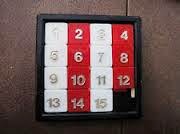
My jadeite collection has been curated over the last twelve years, and it may appear random because it pretty much is. I would only pick up items as I saw a fair (to me) price at flea markets, antique shops, with fellow dealers and the occasional estate sale. I think I am ready to sell much of my kitchenware, just keeping a few pieces, Putting it all back in the tub for storing was like working one of these puzzles. Remember how frustrating those were??
Do you collect jadeite glassware? Do you use the items you collect?  Is there a piece or pieces you would love to own but haven't found yet? I'd love to hear from you! Also, I'd love for you to come back later in the week when I share the tableware.
(Thank you, Jann, for sharing this post at Share Your Cup Thursday #138!)
Rita C. at Panoply
Sharing with any given number of these fine hosts:

Wednesday, March 11, 2020

Flowers and Birds as Inspiration in Beaded Purse Collection

Those who know me know I have a fairly extensive collection of vintage and antique mesh and beaded purses, mostly dating from the 19th and early 20th centuries. I am a member of the Antique Purse Collectors Society, some of whose members' collections rival those of world museums. There are members within the society whose knowledge of purses through history have led to reference books highly regarded on the subject among collectors. We even have members who are still preserving the art of hand beading and restoring these gems today.

Capturing the essence of spring in the designs with flowers and birds, I thought I'd share a small portion of my beaded purse collection - just one type of the many purses I've collected - which reflects the skill of these little works of art. Grab a drink and get ready for lots of photos. I hope you enjoy!
Many of my purses have come directly from long-time collectors' collections (noted within this post, from the collection of), including those pictured immediately above (tulips, Czechoslovakian), and below, both from the Evelyn Haertig collection. The handbag below is featured on page 74 of her reference book titled, "Restoring and Collecting Antique Beaded Bags".
Other handbags in my collection have been scoured from online websites over the years. As is true with any collection, trying to buy nearly perfect examples is key. I am showing some of my best examples of florals and birds, but I have plenty of lesser examples from my early years of collecting.

The example pictured below (roses) has a chatelaine clip (worn on the waist), and is framed in sterling with British hallmarks, monogrammed 'Anne Vaughan Heins'. It has a push button opening. Although the bag is in very good condition, it has no beaded fringe (but probably did at one time). Replacing fringe is an acceptable restoration in the eyes of handbag experts if done professionally.
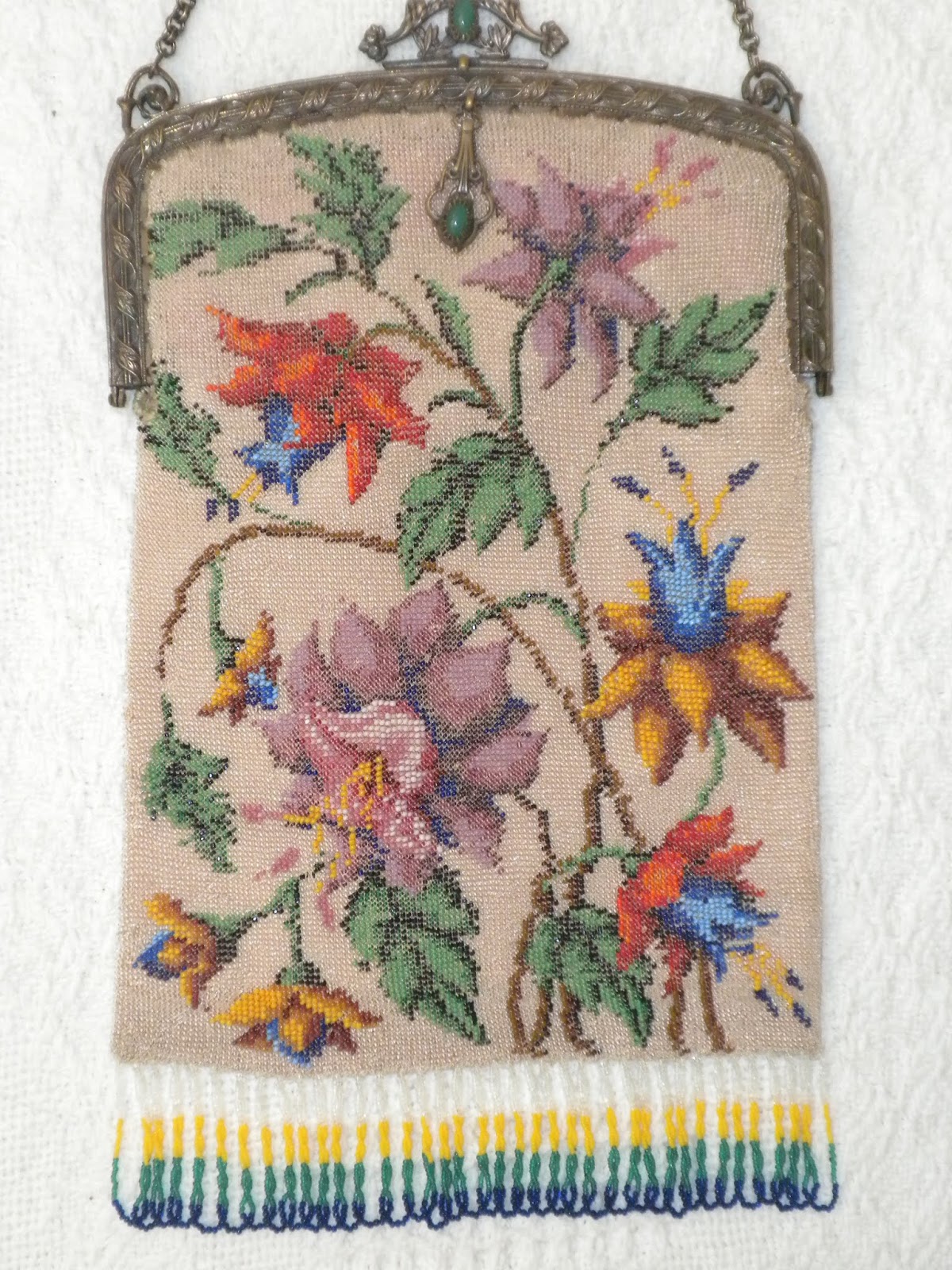
Glass beads used in antique purses were primarily manufactured in Venice, Italy, and in Czechoslovakia. Value of purses is dependent on size of beads used (smaller = generally more valuable). Most examples are either hand knitted. woven, embroidered, netted or crocheted, worked in a horizontal and vertical looping technique. Hand knitted beaded purses were mostly made in Germany, historically speaking. The purse below depicts chrysanthemums, and one notable flaw is a few missed counts in bead colors used on the yellow mum (see approximately halfway through the flower and the horizontal line).
The example below has various florals including iris, forsythia, carnations, roses and morning glories, with a twisted loop fringe. Fringe styles can often denote German makers' origin and can be determined by the trained eye (I am not that trained!). The styles of fringe include ball and tassel, plain or twisted loop, plain stick or stick and loop, basket weave, or some combination of these mentioned.
Pictured below is a primarily white glass beaded bag with roses and violets, and a unique, Italian micro mosaic frame. Desirability among collectors can be increased significantly not only by smaller beads in the bag's body, but also when frames used to attach the bags are unusual or jeweled. Jewels may be semi-precious or precious. Precious metal frames, and marked frames by noted jewelers such as Cartier or Tiffany are prized. Other frames can be made of brass, tortoise shell, bakelite or celluloid.
The bag below was machine made (roses and peacock with a celluloid, gate mouth frame), and has a basket weave fringe. The lining is cotton, but many finer purses are typically lined in silk. The bag is in good condition and has a nice, intricate fringe, but would be of lesser value than a handmade bag of similar design.
The example below is knitted columbines - a lesser common floral theme - with a twisted loop fringe, from the collection of Mary Littiken.
Elaborate tassels are part of the appeal on the reticule (drawstring) with roses bag below. It was made in France.
Many French-made beaded bags were made from cut steel beads. The handbag pictured below is one such example, with a Cupid center medallion and rose bordered design, from the collection of Shara Stewart. The fringe is stick and ball, with a push button opening. Steel beaded bags can be determined by testing with a magnet. If the magnet does not stick, the bag is likely made of aluminum beads - another, more modern bead.
The handbag below has a predominantly brown background glass bead, with roses and other florals, a jeweled frame, kisslock opening. From the collection of Lori Blaser.
The French-made handbag below has a beautifully draped knitted body with floral spray, and a coral and gilt frame, push button opening.
The frame on the bag below is 800 sterling silver, with a cherub harvest design frame and floral baskets for the chain, predominantly roses in the body (beaded tassel fringe on ball are missing).
Another example below shows beaded florals and fruits on enameled and jeweled frame, kisslock opening, and simple stick fringe, from the collection of Mary Nunn.
The bag below, while missing its fringe, is desirable because it is a Tiffany sterling frame. The lilacs are a less common floral design found, also increasing the desirability for collectors.
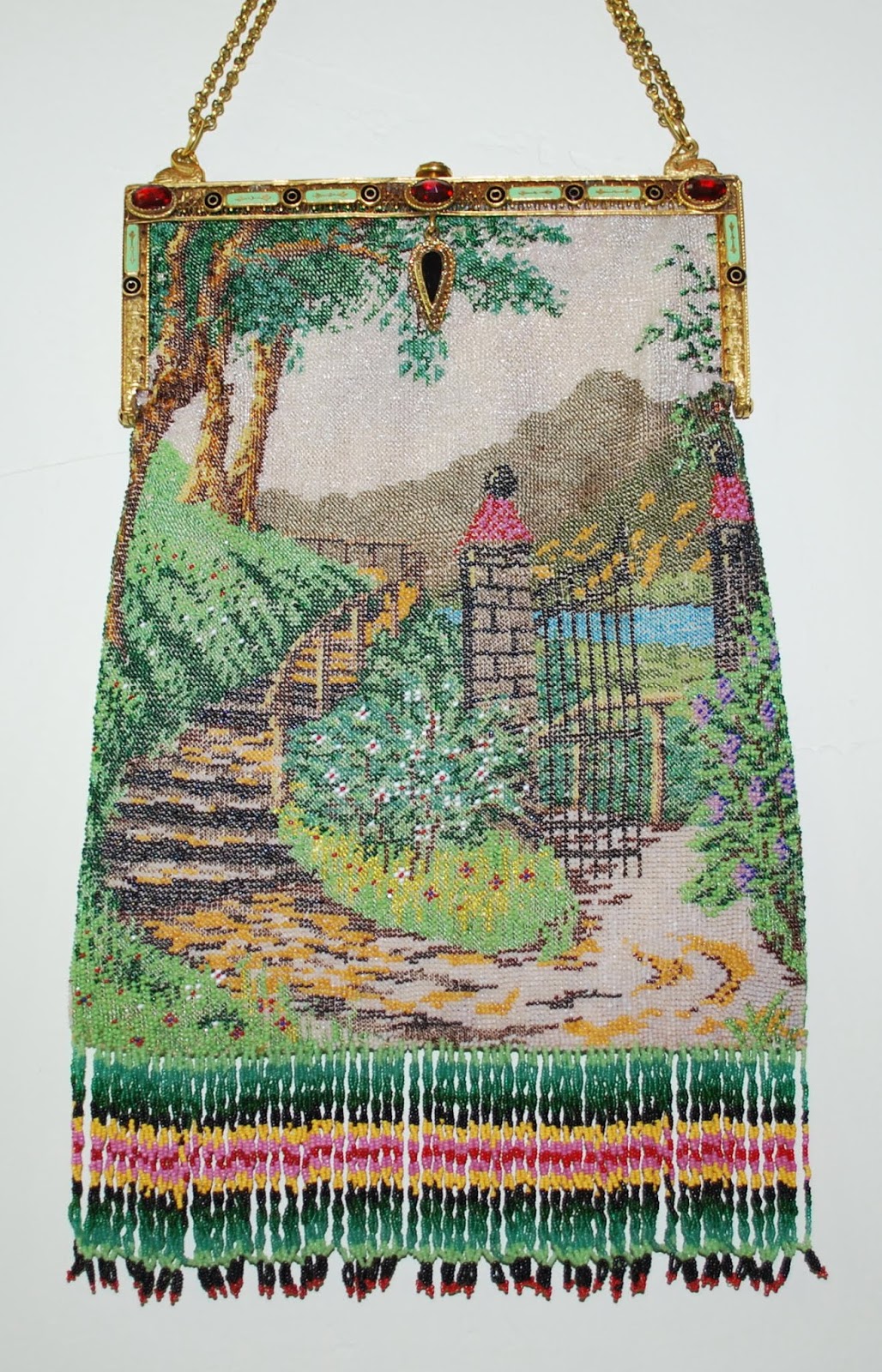
Some floral beaded purses take on more complex designs, such as the scenic beaded purse with garden, gates, staircase, lake and trees with jeweled frame, push button opening shown below. From the collection of Shara Stewart. The scene is repeated on the reverse, as are all of the bags in this post, unless otherwise noted.
Also from the collection of Shara Stewart (and probably a top favorite in my personal collection) is a rare example of a two-sided, beaded scenic garden and lake. Side one depicts people in boat on the lake, with jeweled fob closure.
Side 2 depicts lake with sailboats, and floral path to the water.
Detail of the jeweled fob.
Other beaded handbags appeal to me for the combination of florals with birds, as in the example of floral and macaw bird reticule below.
The beaded bluebirds and cherry blossoms, while a favorite for its design, is another example of a machine made handbag.
Lastly, another example of beaded bluebirds on branches with florals. The intricacy of the design appeals to me for its realistic capture of the birds and flowers. From the collection of Kathy Gunderson.
My first advice for any would-be purse collector would be to seek out what you love. These handbags all appealed to me for my love of gardening - florals and birds. I have several categories of the types of purses I love and have collected, most of which may be seen on my Pinterest account on separate boards by their category (such as antique beaded purses, mesh purses, children's purses, etc.).

I hope you enjoyed this portion of my purse collection, and that it has provided a bit of spring gardening inspiration for you. If you have any questions concerning this or the Antique Purse Collectors Society, I will be happy to answer or refer you to one who can if I do not have the answer. If you do not want to comment below, feel free to email me: wv.panoply@gmail.com. As always, thank you for your readership!

Saturday, September 28, 2013

A WWI-Era Beaded Purse Restoration - Before & After

If you know anything about me, you know I love beaded and mesh antique and vintage purses.  I have a personal collection that spans from very collectible to those first acquisitions which are, for the most part, reminders of lessons learned in collecting.  But every now and then, the proverbial ugly duckling turns into the beautiful swan, right?

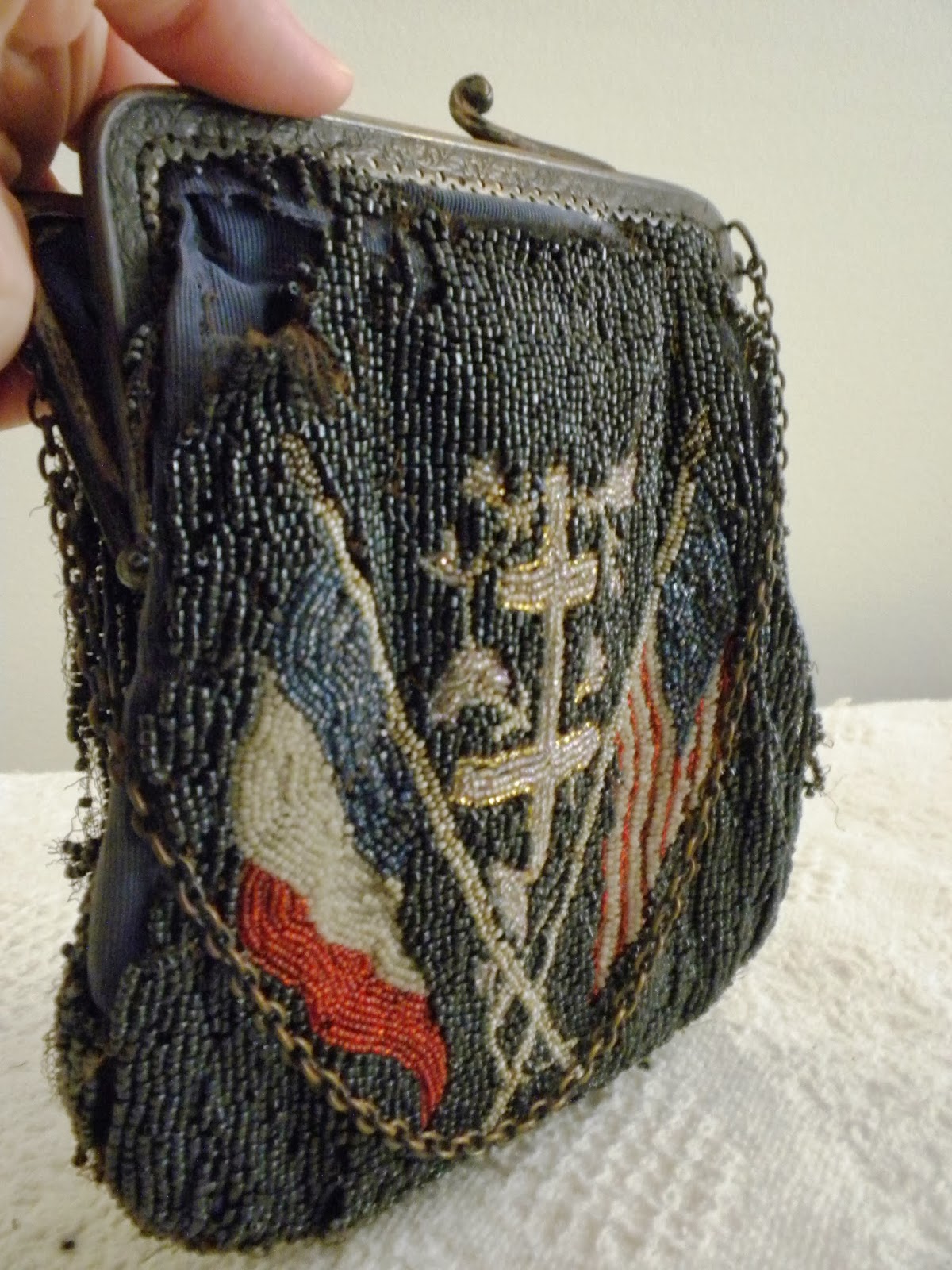
This is the story of the beaded purse that was transformed, much like the duckling to swan.  The purse dates from the first quarter of  the 20th century, likely between 1917-1925.  I won the purse through an online auction, and paid just a pittance for it.  You might argue it was pitiful, indeed.  Here are a couple of photos of the BEFORE condition of the purse (as acquired through a winning bid):
BEFORE:  WWI-Era beaded purse - front
BEFORE:  WWI-Era beaded purse - back
What prompted me to bid in the first place was the design of the purse.  Historically-themed purses are highly collectible, and I knew it was likely WWI because of the French and American flags on front, along with the Cross of Lorraine.  On the back there is an obvious rainbow, but a not-so-obvious USA beaded into the bottom and an even less obvious '42' beaded into the top, right hand corner.  I am a self-professed Francophile, a purse collector, and a calculated risk-taker, so I bid and, ultimately, won.

When the purse arrived, it came with a tiny bottle of beads, and the bag was literally shedding each time I lifted it.  Here are a couple more photos of the shape the bag was in:

I pretty much just reveled in the inexpensive score, and then put the purse in a drawer and stored it - for more than two years.  In 2010, I attended the Antique Purse Collector's Society annual gathering in Cincinnati, and took the purse along, hoping I would meet one of the members who restored these types of bags, someone who might take on my purse project.  I was too embarrassed to even bring it out.

This summer, I decided to contact one of those members on the West Coast who restores purses, Marion Held, through Facebook.  I sent her photos and asked her if she would evaluate the project's worth.  She immediately commented on the unusual pattern which she had never seen, and said it was salvageable, and ultimately gave me an estimate for completing the work.  Scope of work was to include repairing the body, replacing the frame and lining, and adding a twisted, bead fringe to the bottom.

The work-in-progress was promising, and I was sent the following photos, showing me a sampling of the fringe, along with three different frames to choose from:
WORK-IN-PROGRESS:  Frame Choice #1
WORK-IN-PROGRESS:  Frame Choice #2
WORK-IN-PROGRESS:  Frame Choice #3
After three months, my purse finally arrived, and here are the AFTER photos:
AFTER:  WWI-Era Beaded beaded purse - Front, Fully Restored

AFTER:  WWI-Era beaded purse - Back, Fully Restored

AFTER:  WWI-Era Beaded Purse, Inner Lining Replaced
I did some research, and I found a little more history of the motifs beaded into the purse.  Although I originally felt the purse was dated to no later than 1925, the '42' confused me a bit.  Turns out, it stands for the 42nd Infantry Division (Rainbow) of the National Guard and US Army.  If you have an interest, you can read more about it here (you need to scroll down until you come to the rainbow and sub-heading).  According to this source noted, the 42nd Division has served in WWI, WWII and in the Global War on Terrorism (GWOT).  The rainbow started out as a half-arc, multi-colored thin striped motif and later changed to a standard, 3-color striped quarter arc, outlined in green.  As per the description, my example matches the earlier version, near the World War I era.

According to Wikipedia, The Cross of Lorraine "is part of the heraldic arms of Lorraine in eastern France. Between 1871 and 1918 (and again between 1940 and 1944), the northern third of Lorraine was annexed to Germany, along with Alsace. During that period the Cross served as a rallying point for French ambitions to recover its lost provinces. This historical significance lent it considerable weight as a symbol of French patriotism."

As a collector, I am thrilled on several levels with how this purse turned out.  I originally bought the purse on a hunch that its design was special.  I found a first-class purse restorer in a fellow member of the Antique Purse Collector's Society.  The restored purse is, once again, the beautiful example it was intended to be, with a reasonable sum invested.   My experience with this purse restoration has been very positive, and I would certainly consider undertaking it again.

Have you ever had one of your collectibles restored?  How was your experience?

If you're interested in seeing more of my purse collection, please visit my Pinterest boards below. You'll see my restored purse there, along with many other examples of beaded, mesh, and other styles, most of which are from my personal collection.  You can also click on the link on my sidebar titled "A Panoply of Purses - My Personal Collection" to view the book format of many of my purses. Enjoy!
Panoply Antique Beaded Purses 
Panoply Antique & Vintage Mesh Purses
Panoply Vintage Children's Purses
Panoply Other Antique & Vintage Purses, Vanities 

Sharing:

Thursday, February 19, 2015

Jadeite Collection - Part 2 of 2: Tableware

I shared a part of my jadeite collection, the kitchenware, in my last post, as well as a sneak peek into the rest of my personal collection (see photo below). After reading Country Living's article in their March issue on collecting jadeite, I was prompted to pull mine out. Today I'm sharing the rest of my jadeite collection - the tableware - and setting the table.
I don't know of too many things that beckon spring any better than a table set with the happy color of jadeite! Whether or not the weather is moody, as on the day these photos were taken, the jadeite color just has a way of lifting the mood to happy, regardless of the sun being out or behind a cloud.
Jadeite Tablescape for Four
Oh my goodness, I love jadeite! I have collected it for nearly twelve years, mostly in random acquisitions from flea markets, antique stores, and fellow collector friends. My favorite line of dishes are Anchor Hocking's Fire King Restaurant Ware, because they are so nice and heavy. I have twelve dinner and salad plates, but fewer accompanying tableware items.
My Jadeite Tableware Collection, Other Smalls
The chili bowls in my collection were the only pieces I scored from eBay, in order to round out my collection of tableware for a decent number of place settings (six, equal to the number of D-handled mugs). I don't know if you've ever checked jadeite prices on eBay, Etsy or Ruby Lane, but they have been ridiculously expensive for several years. It is currently a seller's market for jadeite. The CL article I referenced above quotes some of the current pricing on jadeite pieces in the various patterns, by the various makers.
I already had a grocery store bouquet on hand, so I freshened the cuttings for my jadeite vase and set a table with my Restaurant Ware. A few other - not made for commercial use - jadeite patterns round out the tableware. The covered butter dish is also vintage Fire King, but in the milk glass (ivory).
The oval platter and creamer/sugar bowl with lid are the Jane Ray pattern. The vegetable bowls are in the Swirl pattern. The glass pitcher is vintage Blenko, the silverplate utensils and salt/pepper are also vintage, as are the tablecloth and napkins. The drinking glassware is everyday, contemporary with a faux bois (false wood) design.
All of my jadeite tableware is vintage and authentic. It is what I prefer to collect, but I am not a jadeite snob. There are many reproductions that are very attractive, even unusual. One such example I own is what's known as the "Bottoms Up" shot glass (not pictured, so as not to offend any readers). It has a female nude bent over a glass, the original from the Art Deco era. I know mine is a repro because of the heavy side seam from the glass mold, a telltale sign which I learned after buying (inexpensively). A couple other small items in my jadeite collection include the ink blotter and flower pot pictured (below).
Jadeite ink blotter, flower pot (upside down)
I love jadeite (I know, I already said that). In my mind, it is the perfect color choice for a cottage look. I think I'm subconsciously hoarding for my someday dream cottage. I'm consistently drawn to the soft colors of yellow, aqua, jadeite and white. I refer to them as my cottage colors. I even have a storage tub in my basement stash that's labeled "cottage pottery" in those colors. My guest bedroom and bath are done in those colors and I never tire of them.

As with my prior post, I am providing my recommended reference book for anyone interested in knowing more about jadeite. The caption on the photo below provides the link that will take you to the Amazon site for buying information. (As mentioned in my post prior, no compensation was received for any mentions or links).
Jadite, An Identification & Price Guide, by Joe Keller and David Ross
Is it just me, or do you love jadeite too? I'd love to hear from you. Tell me about your collection, whether you've scored some really good (or really bad) deals. Does it evoke the idea of what cottage looks like to you?

If you missed my first post on my jadeite collection, you can read about it here:
My Jadeite Collection - Part 1 of 2: Kitchenware
Here is  another tablescape I did, incorporating my jadeite with a couple other lines of my china collections:
Spring Themed Luncheon Tablescape
Also, if you're interested in other tablescapes, mostly created with my vintage china collections, you can type the word "tablescape" in the search block on my sidebar, and several posts should appear. Thanks for your visit!
(Thank you, Jann, for sharing this post at Share Your Cup Thursday #138!, also to Tammy for the feature on Share It One More Time, to Karin, at Something to Talk About #8, as well as Jill at Let's Talk Vintage! #23).
Rita C at Panoply
Sharing with any given number of these fine hosts: